
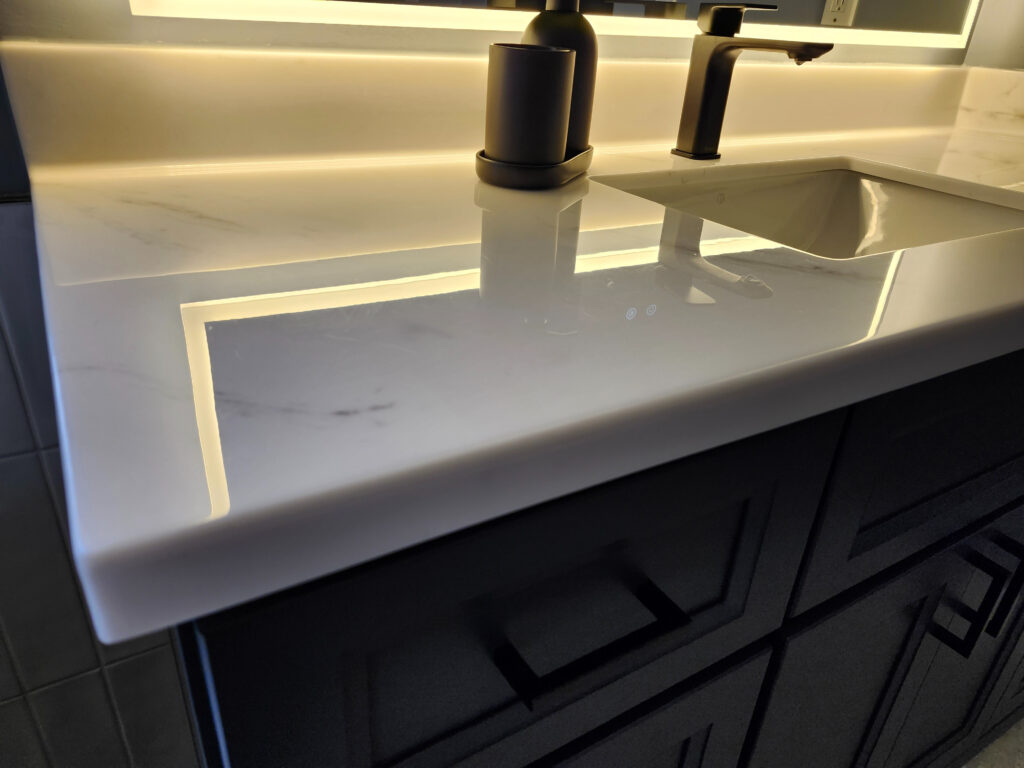
When we think of high-use bathrooms, we picture spaces that experience frequent daily traffic. In other words, these are areas that serve families, guests, or employees consistently throughout the day. Therefore, the materials used in these settings must be both durable and easy to maintain.
We often assess these needs during our consultations because it’s not just about style. Above all, functionality must guide the decision. Whether it’s a home with kids or a commercial space, the wear-and-tear factor plays a major role in material selection and layout decisions.
Firstly, durability should be the top priority when choosing a vanity top. Materials like cultured marble and solid surfaces are ideal for these bathrooms. They resist chipping, cracking, and staining far better than other options. Likewise, these surfaces are non-porous, making them more hygienic in shared or busy environments.
Further, the right finish also matters. Matte finishes can hide water spots and smudges, while gloss finishes tend to show imperfections more quickly. For example, in our high-traffic bathroom projects, we often find that soft matte finishes provide the best balance between aesthetics and practicality.
While durability is important, ease of cleaning is equally essential. That is to say, the easier it is to wipe down and maintain the surface, the longer it will last without needing repair or replacement. In addition, certain materials offer built-in resistance to mold, mildew, and bacteria buildup, which is critical in humid spaces.
We usually recommend reviewing options listed in the bathroom accessories and surface finishes section to match vanity tops with proper supporting hardware. Consequently, combining these elements ensures the installation is not only long-lasting but also cohesive with the rest of the bathroom.
Certainly, the vanity top must blend with the overall design theme of the bathroom. Most importantly, though, it must do so without compromising performance. Colors and edge profiles should reflect both style preferences and practical needs.
For instance, rounded edges are safer in busy environments, especially homes with children. Similarly, neutral color tones help hide minor wear and staining. We always try to strike this balance with our clients to ensure they get a functional yet beautiful result.
Standard sizes might not always be suitable, especially in small or unusually shaped bathrooms. To clarify, high-use spaces often need custom layouts that make better use of space. A tailored vanity top reduces gaps where water or debris might collect, helping to maintain cleanliness over time.
When working with custom configurations, we rely heavily on precise measurements. After that, we use these to guide material selection and edge detailing. The goal is to eliminate unnecessary seams or awkward transitions that could fail under frequent use.
Another aspect worth noting is how the vanity top integrates with sinks and faucets. Pre-drilled holes for fixtures should align with long-term needs, not just the current setup. For example, if you plan to switch to a different faucet style later, having flexibility in the hole configuration is important.
Likewise, undermount sinks offer a sleek appearance and make wiping down the countertop easier. However, they also require strong adhesion and precise cuts. So, a professional fit is key to avoiding leaks or damage, especially in high-use settings.
Water exposure is constant in high-use bathrooms, making water resistance non-negotiable. Therefore, we focus on selecting edge designs and backsplashes that keep water from seeping behind the vanity or down the sides. Curved or raised edges help channel water back toward the sink instead of off the edge.
Our team also takes care to seal any exposed seams during installation. In other words, a strong sealant paired with the right edge profile can prevent long-term issues like swelling, cracking, or discoloration.
It may seem minor, but the surface finish can significantly affect how long the vanity top lasts. A polished finish, for instance, may look stunning but might require more upkeep in a high-use setting. On the other hand, a honed or textured surface hides water marks and scratches more effectively.
Similarly, the finish you select influences how light reflects in the room. For example, lighter matte finishes can soften a busy space visually, while glossy dark tones may create a more dramatic but maintenance-heavy look.
Even the best vanity top will fail prematurely if it’s not installed properly. That’s why we put extra attention into making sure the vanity is level, well-supported, and securely fastened. Furthermore, sealing connections between the vanity top and wall is a critical step that prevents future water damage.
We align every installation with the specific use patterns of the household or business. Subsequently, we account for expected cleaning habits, frequency of use, and accessibility to ensure lasting success.
Vanity tops should complement other key bathroom components like the tub, flooring, and tile. To do this, we encourage choosing finishes and materials that align with the broader theme. For example, if the bathroom has a stone-look shower surround, the vanity top should echo that texture or tone without becoming overpowering.
In the process, we often reference the broader category of bathroom renovation materials to make smart, cohesive decisions. As a result, the space looks thoughtfully designed and feels more comfortable, even under frequent use.
Drainage is another feature that’s sometimes overlooked. Sloped vanity tops with integrated sinks can make water flow more predictable and reduce cleanup time. Therefore, we sometimes suggest integrated bowl-and-countertop designs in extremely busy spaces.
Moreover, a matching or continuous backsplash prevents water splashes from damaging paint or drywall. In addition, it adds an extra layer of style that makes the vanity look built-in and complete. Matching materials between the countertop and backsplash also reduce visual clutter.
To extend the life and efficiency of a vanity top, we recommend pairing it with proper bathroom accessories. Items like soap dispensers, integrated holders, or splash guards all contribute to less mess and easier cleanup.
We usually highlight these supporting features when discussing our high-use vanity design projects with clients. Consequently, it’s easier to visualize how the space will perform once installed, not just how it looks in photos or diagrams.
Most importantly, the vanity top must match the user’s daily habits. For instance, if multiple people use the bathroom each morning, durability is even more critical. Likewise, if kids are involved, impact resistance and rounded corners are preferred over fragile or sharp-edged designs.
Therefore, we always start with questions about lifestyle before selecting materials. After that, we can offer a combination that balances visual appeal, safety, and longevity.
A one-piece vanity top with integrated sink can offer major benefits in high-use environments. Firstly, it removes the need for caulking or sealing at the sink seam. Secondly, it speeds up cleaning since there are no ridges for dirt and grime to collect in.
These models often work well in powder rooms or shared bathrooms. They’re also ideal for minimalist designs where simplicity reduces maintenance work. In conclusion, they’re one of the easiest styles to maintain in terms of both looks and function.
In short, selecting the right vanity top means weighing several factors—durability, appearance, water resistance, and ease of cleaning. While it’s tempting to prioritize looks, function must come first in high-use bathrooms. To sum up, the perfect solution is one that meets your needs today and won’t cause headaches later.
When we guide clients through this process, we always prioritize materials and configurations that work best for them. Therefore, our choices reflect not just current trends but also daily realities.
In conclusion, The Marble Factory remains committed to providing practical and lasting vanity solutions.
Cultured marble and solid surface materials are among the most durable choices. They resist chips, cracks, and stains, which makes them ideal for spaces used multiple times a day.
A matte finish is generally better for busy bathrooms. It hides water spots and small scratches better than a glossy surface, making it more practical for frequent cleaning.
Yes, they’re great for high-use areas. These one-piece units reduce the number of seams, which means less chance of leaks and easier maintenance overall.
Rounded edge profiles are the safest choice. They minimize injury risk while also being more resistant to chipping under impact, which is helpful in spaces used by children.
If your space is small, oddly shaped, or requires a specific sink configuration, a custom vanity top may be necessary. It allows better fit, which improves durability and prevents water issues.
* Excluding Long Weekends